Pages

Training the Mind of the Horse and Rider

Training the Mind of the Horse and Rider
Click on Logo (Original artwork by Lanie Frick for Messick Quarter Horses. Not permitted to be copied)
Showing posts with label Duster. Show all posts

Thursday, June 14, 2012

Patience


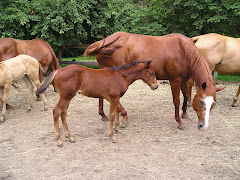
Allie

Once, about 10 years ago, I asked God for patience. I'll never forget this. I went to work for a grade school, helping a child that has behavioral problems. I'm back to working with horses.


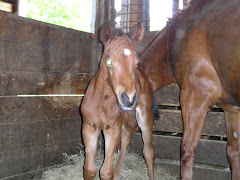
Bonita
Then God gave me many horses to work with, some young and some older.  Now he brought me Arabs.  And I'm loving them.  To me, they are not any different than working with a sensitive Quarter Horse.

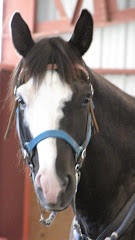
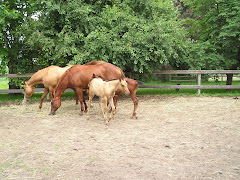
Duster

The horses are tied in the barn for a short time to help with patience.  Learn to stand still.  Learn to stand still when your buddy leaves.  Learn to stand still when you are alone.  Learn to stand still when other horses come into the barn or leave.


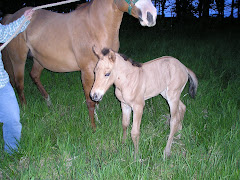
 Honey


Some horses, like Honey, just need to learn to wear a saddle.  She is extra sensitive, and needs to learn to be comfortable with a saddle on her back.


Shaggy just gets to eat!  So he thinks.  He got to work on his patience today too.  He stands tied all the time, until he has to wait on some other horse coming and going.  He had a patience training time today.

Wednesday, March 23, 2011

Looking for an Endurance Horse


Photo of barn we saw. I didn't want to show any of the horses since I'm not interested in them. I pictured this barn for the construction - cement block frame, which hubby always liked due to the structure. Notice how the sides and windows were put in with the blocks turned sideways to allow air flow, allowing the horses to see each other, and to see outside. Smart planning!


A couple of days ago was our 30th Anniversary. Monday, I went looking at some Arabs, to potentially do Endurance Rides. That was a fantastic Anniversary day, to do something horsesy. Afterwards, we stopped to see Caden and take his mommy some flower plants for her birthday.


I’ve decided on looking for an Arab for CTR and Endurance rides. Why would a Quarter Horse fanatic want a different breed to ride?

Why would I want a smaller framed horse when I’m used to having a 15.3 hand horse under me? I’m used to a horse with a larger framed body and muscling. I’m used to horses who act like big puppy dogs, after some years to mature. I love the QH big stride of the trot and wonderful, deep lope. I love covering the ground in a collective, smooth canter.

Arabs are known for their endurance abilities. They are bred to cross the dessert. With a large heart girth and nostrils, they have the ability to take in a lot of air. Their fine legs gives them the agility to move. Their light muscling keeps them from tying up and their thin skin helps with cooling down. And their “want” to move out and go makes them a popular choice for those riders who want to move out.

Arabs cover the ground, ears perked, and ready to move out. No different than a sensitive QH, Arabs can move un-expectantly. Arabs have a ground covering walk, but they can trot all day. And I love a big trot on a horse. I better find an Arab who has a big trot, and loves to go!

The main reason I want an Arab is that I want to move out and go. I want to have a horse that will be competitive at endurance rides. I want a horse with a lot of heart and a lot of try.

I want a horse to be my riding partner on these fast trails for the next 5 or 10, or longer years. I have Shaggy for trail riding, Centered Riding, and dressage lessons. I have Duster coming along to become a buddy as much as Shaggy is being. And I have Starlet’s new foal that we are expecting to follow in them.

I’m looking for another horse for another reason and for another style of riding. That is why I’m looking for an Arab. Maybe looking for an Arab brings the excitement back to riding. Looking for an Arab makes me want to ride Shaggy for a different reason than for competition. Shaggy is going to be my “go to” horse for everything else. The Arab will be my “go to” horse for when I want to compete.


The search continues. And like Caden, I'll be wearing my helmet, too!

Sunday, December 5, 2010

Morning Hay

New round bales on a crisp, cool morning. It was only 16 degrees out this morning.

The early morning light coming between the trees,


A fresh round bale, with Goldie and Chick getting their place,


Shaggy,


Savannah,


Goldie,


Shaggy and Duster getting some hay on the ground, since the others wouldn't let them in,


Starlet and Duster, mother and son,


The look like each other, except the coloring,


Starlet definitely seeing something, must be looking at the cats, but I can't believe that she isn't at the round bale, eating the hay!


Saturday, October 9, 2010

Corn is Harvested

Corn is harvested off the fields! That means I can ride in the fields. Now the beans are off, and I can enjoy some nice places to trot out and to lope.


I have been waiting for this to happen for a month now. When I rode the fields the other day, I could smell the freshly cut scent of corn. It smelled so good.


Today was a very warm day. The last 2 weeks have been days full of sun. No rain. Sunny with a slight wind. I needed to feel the warmth of the sun on my face. Nothing is better for the soul than feeling a good horse underneath you and the sun warming your back.


I’m riding 4 horses. 3 of my own and 1 training horse. And I’m getting a 2 year old ready to ride. The training horse is ready to be ridden outside the arena and have hour long rides in the fields. He has had a month of desensitizing and slow arena work to build up his confidence. He has had 2 short rides in the bean field behind the barn. Now he is ready to go further.


My 3 horses are all so different from each other. Savannah is the gaited TWH (Tennessee Walking Horse). She is only 4, but I’m getting tired of her looking for things to jump at. I am building up her confidence with as many short and long trails rides as I can. I try to ride with other horses also.


Shaggy has had his first couple of rides to the field. I just love riding him. He is 7, but he was on the back burner for 5 years. That is turning out to be ok, as he is a confident, gentle horse. He He isn’t scared of anything, and when he is hesitant about crossing a ditch, he has a lot of try. He eventually sticks with it, and crosses what he is hesitant about, and generally without jumping the obstacle. He perks his ears and trots out.


Dixie is the 16 year old mare that I bought in May as a replacement lesson horse. One of my lesson horses is in foal, and that only left me 1 good horse. I wasn’t sure if Dixie was going to work out as she has a very fast trot and lope, or should I say canter. But the more I ride her, the more I like her. She loves the fields, too. I was discouraged with how Savannah was always looking to goose, and the day before the Peter Campbell clinic, I took Dixie to the field. I enjoyed the moment I got on her to the moment I got off her. She made me realize why I love riding the fields at the trot and the lope.


I love the outdoors. When I think it’s too much work, I just need to get on a horse and ride the fields and CRP land. I need to sit on top of the rise and feel the warm sun and gentle breeze. Some days, the wind isn’t so gently, but brisk and cold, but that is ok. It is exhilarating if you let it be. Riding can be that way too. IF you just let it be. No matter what is going on in your life, or with you, just go ride. Let everything else disappear, if only for a short time, and ride the ride.


“Embrace the Journey!”

Thursday, October 7, 2010

Peter Campbell Clinic Day 4

MONDAY, October 4, 2010


Duster:


I started the morning with Duster tied to the trailer again. He did fine at the trailer by himself.


Duster was still a little jumpy when the bag touched his flanks and belly. But he stood still as I moved the bag from his hip, down and up his back legs, belly, up and down the front legs, up his neck, and over his poll and down his face.


Peter took Duster and moved him with the horse, asking him to move his hips away. He reached down and moved the stirrups against Duster’s sides. He had me step up into the stirrup, reach over and rub the neck on the opposite side. I had done this the last few days that I had worked Duster at home. He had me rub behind the saddle, as that is where the horse is a little goosey if the rider drags his foot across his back when he mounts and dismounts. I stepped up and down. Then I stepped up and sat down into the saddle. Then stepped down. I stepped back up, sat in the saddle, and Peter had me hold the Cheyenne roll of the cantle with one hand and the horn with the other hand. He moved Duster around with his horse for a minute, than I stepped down. I felt no resistance in Duster. He moved off freely. Duster is ready to start riding at home. Later in the morning, Peter asked if I wanted to ride again or if I thought I had done enough. I wanted to end the clinic with Duster relaxed. I was at a good spot with him and I was happy where I was with him. I accomplished what I wanted to accomplish with Duster. I wanted a young gelding who wasn’t so pushy and was more respectful of moving where he should move.


Shaggy: practice moving the hips around without the reins, moving the hips to both the inside and outside to reverse the horse, at both the walk and the trot, on a very loose rein

We started our last session of the last day with loose reins. We continued to practice moving the hips. Then we moved the horses out at the walk, asking them to reverse by moving their hips to the inside of the rail or to the outside. It was easier to reverse the hips when we were pushing the hips towards the center and the head went towards the rail. It was more difficult with Shaggy to move his hips to the rail and have his head come to the center. Once he started moving his head towards the center, he would walk a very large circle to reverse, instead of swinging his hips in toward the center. This should have taken a few steps, like a forehand turn on a long loose rein, not a large slow circle.


Peter said that they will blink as they move their hips - each time they step around in a half circle to reverse, they will blink with each step. This is a “ah ha” moment. And it was fun to watch to see when the horse blinked and when he didn’t. If there was any resistance, or if the horse didn’t move his hips freely, he didn’t blink.


We practiced snaking down the side of the arena - move hips slightly in, then slightly out. This sounds easy, but it was not, especially on a very loose rein.


We ended the clinic with this last exercise - pick up the trot, move the hip out so the horse faces the fence, then ask the front end to move over, with the head and neck level. Always asking for a lightness, asking for the jaw to be down and in, always asking for the head and neck level. Sometimes we stayed at the trot and did ½ circles or full circles. We mixed up the patterns, but it was always about keeping the horse moving. Every now and then, we would pause, but just for 1 second, then continue.


Any time the horse pulled on your hands or lifted his head, we were to stop the transitions, ask for the horse to soften, then continue the transitions. We were to work as fast as we could without “upsetting the horse”. Towards the end of the 4th day, the horses were responding with a quietness and a smoothness that they didn’t have the first day. Feel was developing.


The week after the clinic, it took me days to process and write about everything that we did. I’m not doing anything with my 2 year old This week. I will continue with Duster next week. I should have a few rides on him before I leave him alone until next spring. I will continue the work with Shaggy, as he is ready and more mature to continue on. My goal this fall is to free up his hips and to move his hind quarters more freely.


I hope you enjoyed this very long read. I have read, and re-read, this about 6 times. The progress on each horse is amazing. The one thing that I’m most impressed with is that both horses became calmer and calmer as their training became more intensified. Over the course of 4 days, they were taught a new exercise, and then we had an hour of repetition. We varied the exercises to keep the minds of the horses fresh. As we worked harder, the horses remained more in focus to us, the rider. It goes to show you that you can work your horse intensely, and by being consistent, you will have a more broke horse. One that is respectful to you.


Come along on the ride with me. “Embrace the Journey!”

Peter Campbell Clinic Day 3

SUNDAY, October 3, 2010


Duster: stand totally still while being rubbed with the flag, from tail to nose. Rub neck and hip, step up and down from the stirrup from both sides.


I started this morning with saddling Duster tied to the trailer instead of in a stall. I left Shaggy in the trailer so he had a buddy close, but couldn’t easily be seen. After saddling Duster, I unloaded Shaggy and led him to the stall area, away from Duster on the other side of the trailer so Duster couldn’t see him. I want Duster to get used to being alone. He waited patiently without whinnying and pawing.


I touched Duster all over with the bag. He needed to stand still while the bag moved up and down his back and front legs, under his belly, over his shoulder, up his neck and over his head. I rubbed him on his neck and behind the saddle. I moved the stirrup leathers against the sides of his belly. I repeated this on the opposite side. Interesting that he was goosier on the near side, the side we handle the horse more often from.


I stepped up and rubbed Duster on the neck and hip. When he was goosey and moved, I stayed where I was until he stopped moving, then stepped down. I repeated this a few times on each side of him.


Duster didn’t want to trot when I led him from the ground. Peter worked Duster from the ground, and got him to lead better from the ground. He “drew” on the lead rope, picking up slack and making it tight on Duster’s nose, than instantly releasing him Duster stepped forward. He worked the same way, with a stronger feel on the rope when he “drew” and made the rope snug, asking Duster to trot. Then I did the same, asking and being light.


Peter led Duster from his horse, helping him to lead better. Peter continued to lead him around with his horse, asking for him to move his hips over from horseback, walking off and asking Duster to step forward without hesitation. After that lesson, Duster trotted each time I asked him to from the ground.


Shaggy: moving the hips around without touching the reins


We were to walk, stop, reverse the horse with the horse moving the front end around in a pivot, keeping the head and neck level, stopping when the horse raised his head and ask for him to soften (dropping his head and neck, and then the jaw to the inside).


The next set of exercises included stopping and reversing. We were to move the front end ¼ way towards the rail, with lightness, stopping any time the horse raises his head, and ask for the lightness again before continuing on to complete the reverse or the full circle. The jaw should be tipped towards the turn. We finished the reverse by asking the hips to move over. Then we walked a full circle, reinforcing the jaw staying tipped towards the inside of the circle.


We mixed this up with walking and trotting circles to the inside, both a full circle and continue on the same direction, or a ½ circle and reverse directions. We also stopped at both the walk and the trot, moved the hip to the rail a quarter turn, then turned the front end a quarter turn to reverse the horse. Stop, pause 1 second, and walk or trot on. We also walked or stopped and asked for a reverse, taking the hip to the inside and shoulders out. We always asked for a lightness, tipping the jaw down and towards the turn, and always stopping the second the horse resisted and pulled on the bit and on our hands or lifted his head.


The final exercise was to move the horse’s hips without any contact on the reins. Basically, we were to do a forehand turn without reins. Peter said not to cheat and touch the reins. The horse was not to trot when he felt one leg on him. Many horses speed up when they feel legs, but 1 leg means to move the shoulder, move the body or move the hips, NOT to trot. It took many transitions to teach the horse and to get the horse to be respectful of that one leg. I needed to touch the reins in the beginning, to start the reverse, and I needed to add a LOT of leg. Shaggy isn’t dead sided, but he isn’t as sensitive as some horses. He doesn’t move his hips and hind legs as fast as Peter wanted a horse to. I will be working on this to ask him to move more quickly and more freely.

Peter Campbell Clinic Day 2

SATURDAY, October 2, 2010


Duster: stand still while being rubbed with the flag, lead better at the walk and trot.


I continued to work Duster with moving him with the bag, from side to side and reversing. Touching him all over. Having him stand still. Duster turned when he was suppose to, without coming in to me. He stayed at the end of the lead rope. He kept his full attention on me and was not worried by anything else in the arena. He didn’t care when the steers, on the other side of the cement wall, were being fed. Duster learned his 1st lesson very well and today was lesson #2. Duster still didn’t want to lead without lagging behind, and he was not going to trot.


Duster needed to free up his hips and move them over. His horse helped to push Duster’s hips around. Peter moved Duster around with his mare to get him to disengage his hips. He held Duster’s head close to the horse, and asked his horse to move, and by doing so, Duster HAD to move his hind legs. His movement became freer and freer and he started crossing over with his hind legs instead of just stepping sideways.


Peter led Duster from horseback, asking him to move forward without hesitation. Duster would pull slightly against the lead rope then move forward when he felt the pull from the lead rope against his halter. I know some of the hesitation came from not knowing the horse that he was asked to come up beside. The mare pinned her ears, telling him to stay away from here. Eventually, he walked and trotted freely beside the other horse.


Shaggy: Reversing at the walk and trot, trotting out.


Shaggy had to be light, meaning giving to the bit in all the transitions. He was to stay light, reversing with lightness, with head and neck down, and with jaw down and to the inside. Our exercises today including MANY reverses. Reverse in a circle to the inside at the walk and at the trot. Reverse at the same rate of walk or trot. Walk, stop, ask for lightness, back and walk or trot off. Repeating this many times. Trot out, posting at the trot. Sit the trot and ask for lightness. Walk and stop with lightness. Trot out, trot slow, walk, stopping with lightness, back. Pause. Many transitions. I think Shaggy is beginning to stay lighter and he is beginning to not toss his head with the trot.

Peter Campbell Clinic Day 1

FRIDAY, October 1, 2010


I took 2 horses to the Peter Campbell clinic. One was Duster, a 2 year old that hasn’t left the place until today. He’s only been saddled for the last 3 weeks, being ground driven, lunged with the saddle on, but didn’t have any riding. The other is Shaggy, a 7 year old gelding that I have given about a month of riding each year since he was 3. This year, I started riding him regularly since May. He needs to move better off my legs. Both of these young horses are by my Stud, Duke, a son of Good Asset.


Duster is my 2 year old. He is extremely bully and pushy. A big puppy dog who is gentle, but had a mother who was herd mare, at least for the last 5 years. Duster isn’t scared of the older geldings. He just walks among them and pushes into between them at the feeders.


Duster: He was to move around me, turn from side to side, turn between me and the wall. He was to stay back away from me and not push into me. He was to pay attention to me and not to all of the commotion in the arena.


I’m glad that Duster is a quiet guy, because he came into the arena with his head up and ears perked and snorting. Where did all of this come from? He heard the cows next to the arena being fed. They couldn’t be seen but he wasn’t too bothered by that. Then a water sprinkler was wetting down the small arena on the other side of the ¾ cement wall that separated the 2 walls. The was hitting the wall, making that spritzing sound. Duster has heard the water sprinkler before, but hearing it and not seeing it was 2 different things. His mind was on that instead of me.


I started to lunge him while Peter was talking to the group. He didn’t want us to wear our horses down to get their minds, but to make them change directions on the lunge line instead, with the aid of a flag attached to a short whip. I had to move from the end of the arena to a spot on the long wall so I could work him.


Duster had to have a major attitude adjustment on the first day of the clinic. With the help of a short stick/whip with a flag attached to it, we were to make the horse move around us in a circle, and then stop and turn. We worked on moving the horse’s hips and shoulders. We worked on moving the horse’s body away from us. Duster still didn’t like all the noises. Peter said that, to get his mind, make him move where I wanted him to move and when I wanted him to move. I was not doing a good job with getting Duster to move away from me with the bag/flag. Duster knows how to lunge, but that first day, he didn’t want to stop, or turn, or move where he was suppose to. I was starting to sweat. He was being the bad kid in school! Peter came over and asked if he could work with him. I said of course, Peter wanted a YES, and Duster went to school. He graduated with more manners. I was able to do the same work with him. Duster had learn to respect the stick with the flag, to respect the lead rope and to move his body where it should go.


Duster ended the day more respectful and more quiet than he started the day. He learned to move his hips and that was the start of having him pay attention to me and not to everything else that was going on. He stayed at the end on a relaxed lead rope. When I moved, he turned his body to follow me with his eyes. The exercise that Duster had to learn was to actually move his hips, crossing his hind legs when he moved them, therefore freeing up his hips more.


Shaggy: Walking out, getting the walk as fast as you can. Extend the trot. Walk or stop with lightness.


During the afternoon session, I rode Shaggy. We did a LOT of walk, trot, extended trot, walk, stop transitions. The main emphasis was on stopping light and giving to the bit. We were to walk and pick up a light feel on the reins, asking the horse to soften. When the horse softens, he will lower and tuck the jaw to the inside. If there is any resistance or pull against the reins, adding more leg to get the horse to move forward.


It is important that, when the horse hardens and pulls on the reins, you have the horse pull against himself and do not pull back. Be ready to soften your hold on the reins the moment the horse softens. Shaggy did well the first day until we picked up a trot. I usually ride in a shank bit, with a covered broken mouthpiece, and he gives beautifully to that type of bit. In a snaffle with no leverage, there was more resistance. At the trot, he was beginning to throw his head up to evade the bit. I kept the hold on the bit steady with my hands, and left him to figure out where to put his head. We will be working on this for the next 3 days.


Peter asked us to walk out, and walk out faster. We were to get the horse to move out a walk and ask for the fastest walk that we can get, until right before the horse would break in to a trot. We did many walk trot transitions. We stopped after asking for a lightness on the bit first. We walked one or 2 steps, then trotted. We asked for a long extended trotting, with a long rein. We asked for walk and/or a stop with lightness. That took some thinking to stop the horse, without the horse throwing out his jaw or lifting his head. As you slow down from the extended trot to a slow trot, then to the walk, and right into the stop, you are asking the horse to give to the bit, lowering the jaw, and stopping with the head and neck level.


We worked in pairs and walked, trotted and loped circles around our partner. This was a fun exercise. I was paired with a beautiful Friesen stallion, and didn’t know he was a stud until the next day! He was a delight to be around. We walked circles and half circles. With each half circle, the horse to the inside went to the outside. The outside horse had to trot when the inside horse walked, and he had to lope when the inside horse trotted. We were to stay even with each other, without letting one horse get ahead or behind the other. We were to make our own circle, paying attention to keep our own horse light, yet stay together. This exercise seemed like it shouldn’t have been easy to do, but after many circles and half circles at the walk and trot, we were able to do the lope circle easily. I was amazed at how light and easily Shaggy did the lope circles. That was his best, collected loping to date!


Shaggy got lighter and lighter as the day went on. I still had resistance on the bit at the trot, but he did soften each time. I know he doesn’t like the bite of the bit on his tongue, but as my hands stay light, and he pulls against himself, he will soon realize that he is causing that discomfort himself. Stay light, ask for a softness, and the horse will respond.


I think the tiredness, that I was feeling after the first day, comes from total concentration of what we were working on. That, and traveling back and forth with 2 horses. I was going to stall them every night, but I didn’t want them standing in a stall from 4 pm to 8 am. They loaded easily so I took them home to be outside in their outside lots for the evening and night. I know that would keep them relaxed for the next day’s work. After their workouts, I’m sure they needed to relax their minds and bodies too.

Friday, October 1, 2010

Peter Campbell Clinic Day 1

First, Happy Birthday, Sara! I can not believe that 28 years has passed since I held my baby girl for the first time. I do miss those years of when you were little, and it was just us playing together. But you know the feeling, because now you are doing the same things with Makenzie. Have a fantastic day!


I am almost too tired to post. I think the excitement of participating in the clinic, along with 7 hours of clinic time, has me almost too tired to move. And this is from a person who rides a lot and who is pretty active outside.


I think my tiredness come from anticipation of what will happen at the clinic. I also took 2 horses. One was a 2 year old that hasn’t left the place until today. I think the tiredness comes from total concentration of what we were working on.


Duster is my 2 year old. He is extremely bully and pushy. A big puppy dog who is gentle, but had a mother who was herd mare, at least for the last 5 years. Duster isn’t scared of the older geldings. He just walks among them and pushes into between them at the feeders.


He had a major attitude adjustment today. We worked on moving hips and shoulders. And moving the body away from us. Duster didn’t want to stop, or turn, or move where he was suppose to. I was starting to sweat. Peter came over and asked if he could work with him. I said of course, Peter wanted a YES, and Duster went to school. He graduated with more manners.


During the afternoon session, I rode Shaggy. We did a LOT of walk, trot, extended trot, walk, stop transitions. Shaggy got lighter and lighter. We worked in pairs and trotted and loped circles around our partner. The main emphasis was on stopping light and giving to the bit.


I hope to be able to write more over the next 3 days. I think I’ll sleep good tonight!

Tuesday, September 28, 2010

Getting Ready for the First Ride

September 27-28, 2010


For the last 2 days, I have lunged Duster with the saddle on. I have ground drove him and threw the lines around his legs. I have tossed the ropes over his head and saddle. I wave the ropes around his face. Nothing spooks him.

Yesterday, in the indoor arena, I brought Duster over to the mounting block and had him stand still. I jumped up and down on the block. I put my weight over the saddle. I reached over to the opposite fender and slapped it. Then I turned him around, facing the opposite direction while I stood on the mounting block and repeated the jumps and slaps. He was a little buggy eyed, but stayed quiet and stood still.


Today, I took him to the outdoor arena. I threw the rope around his head and legs. I tossed it over the saddle seat so he would hear different noises from the rope. I slapped the stirrups against his sides, making sure to do as much on the off side as the near side. I held the horn and jumped up and down from both sides. I put my foot into the stirrup and stepped up and down.

 
Tomorrow, I’ll do more of the stepping up and down. I’ll lean across the saddle seat. And I’ll see if Duster will walk off quietly while I’m standing in the stirrup. I want him to stay quiet and not to be scared.

He will be going to the Peter Campbell clinic with me this weekend. I hope I can do enough ground work there for me to be on him, but I’m fine if he is not ready for that.

Sunday, September 26, 2010

Ground Driving Duster

I have gone back to ground driving all the colts I start, as well as the training horses that I ride. I find that when I drive the young horses with long lines, they not only get used to the ropes around their legs, they begin to give to the bit better and learn how to turn. For the older horses that are in for training, it helps to develop a working mindset, as well as refresh them on staying soft and turning when they feel the pressure of the bit.


Duster, my 2 year old, bridled easily today, already accepting the bit in his mouth. But on the lunge line, he is slightly fighting the pressure of turning with the long lines. I don’t blame him, as this was his first day driving. This is only the 2nd time with a bit in his mouth. He is a smart guy though. He refused to turn, and as he refused and shook his head, he continued to feel the pressure on his mouth. When he gives and turns his head the way he is suppose to be going, he released the pressure himself, rewarding himself for doing the right thing. When he turned his head the way he is suppose to be going, and the pressure was gone, he dropped his head and moved on.


My first day of ground driving him went very well. I ended up being able to ground drive him on a straight line, turning in serpentines, and driving him in a circle around me. When I was behind him, I moved the ropes against his side, slapping the ropes gently on him, and shaking the ropes. Nothing I did with the ropes spooked him.


He is quietly bully, but he gives in and accepts his job. I wonder if he is going to do the same when I get on him! This week, I plan on ground driving me, desensitizing him to the bag on the lunge whip, and stepping up and down off of him. Maybe I’ll be able to ride him at the walk. Fingers crossed, as I want him doing as much as he can, preparing him for the Peter Campbell clinic this next weekend.

Wednesday, September 22, 2010

Bridle on Duster


Yesterday, I took him, saddled, to the arena and lunged him. There was no buck in him as he took off at the trot, and even when he loped around. He is a little bossy and pushy, but in a pleasant way, and if that is possible, it is possible with this colt. He is gentle, but he just walks through everything. That is about to change. I made him change direction, and to pay attention to me.


Duster had the bridle on for the first time today. I brought him up from the lot, along with another horse to keep him company. I tied them both in their own stall, across the aisle from each other. They could see each other, but they weren’t side by side.


I saddled Duster, and today he was going to stand with the bridle on also. I bridled him with a harness leather headstall with a big, copper D ring bit. I like to have them stand tied, chew on the bit, and get used to it in his mouth. He took the bit easily, chewed once or twice, then just stood there. I left him stand tied an hour, gaining some needed patience while feeling the bit in his mouth.


Today, he lunged with the bridle on. I led him to the outside arena. He just went around like he has been doing this for awhile. He trotted and loped around like a pleasure horse.


He trotted and loped over the logs.


He walked over the bridge.


He didn’t care if the rope was around his legs. The only time he jumped was when he farted and scared himself.


I threw the rope all around him. Over his head. Over the saddle. Behind his legs. He isn’t scared of anything. I guess being a bully, but confident, colt has good points.


Friday, September 10, 2010

Duster’s First Saddling


September 10, 2010

Duster is my 2 year old, out of Starlet, a Deck of Stars mare, and by Duke, my stud who is a son of Good Asset. Starlet’s mother, Skipa, was our first 4-H horse, who taught each of our kids how to ride and lope, about grooming and showmanship, and how to be really relaxed around horses. Skipa was your typical perfect first horse. Starlet was from my 2nd group of foals, which was already 15 years ago. Duke was out of an older show mare, a Boston Mac granddaughter, and he was very easy to start as a 2 year old. He has an awesome, deep strided lope.

Duster is like his mother. He knows his own mind. And he pushes others around, even the older geldings. Oh, he needs an attitude adjustment. And it needs to be this fall, at 2 ½, rather than next spring, when he is older, and stronger. He is pushy, because everyone but me thinks that his mother, Starlet, is pushy. I’m not sure how Starlet got to be that way, as Skipa was a sweetheart, but I’m sure at her age, she knew she was boss, and she was able to spread the word without being nasty about it. So that was how Starlet learned to be a boss. And Duster learned to be a boss, or so he thinks. His number is up.

Duster was handled this summer by one of my older, past 4-H kids. She really likes Duster, so she groomed, and led him around. And she taught him to lunge. But he hasn’t had any consistent work since July. I needed to wait until the days weren’t quite so hot before I worked the younger horses. They take a lot of energy, leading, lunging and saddling. That doesn’t sound hard, until you work a horse who needs to learn these lessons. I just don’t want to sweat that much, so I wait until cooler days.

I had the vet coming out to palpate mares, and while I was waiting, I brought Duster up to the barn. His mane was a mess. After I groomed him, I took the scissors to his mane. I knew that tangled mess was a lot of dead hair, and I wasn’t going to be able to comb through it. He has his daddy’s mane. Thick and long. I cut a very long show mane, then took the scissors and snipped up through the mane, so there wasn’t quite a straight line. I hope the mane looks better next spring.


Both Starlet and Goldie are in foal!  Both mares are Deck of Stars mares and are bred to Duke.

Duster was standing well. The vet wasn’t there yet, so I rubbed him with the saddle pad. He didn’t care. I went to get the little barrel saddle, which was lighter for me to lift on and off. I put it on Duster, and he didn’t care. I thought, well, he is standing quiet, I’ll just snug it up while he is tied here. He didn’t care that the cinch touched his belly, but then we groomed him there all summer. He didn’t care when the cinch got a little tighter, so I snugged it up enough that the saddle wouldn’t slip when he moved around. He didn’t care. I left him stand there for about 10 minutes, and he just stood there hanging his head. I tightened the saddle one more time and left him stand a little longer.

I didn’t want to rush him, and he stood quiet for about 1.2 hour, so I unsaddled him and put him back out to pasture. The next time, I’ll saddle him, let him stand awhile, and then lunge him with the saddle on. I hope he doesn’t have much buck in him!

Duster seems to be saying, "are we done yet? I've been standing tied awhile."

Keep watching for updates on Duster’s training. I’m planning on taking him to the Peter Campbell clinic next month. I want him lunging quietly with the saddle on. I wonder if he’ll stay quiet enough for me to be riding him by then.

Thursday, December 17, 2009

HT Photo Challenge "FUZZY"


This week's Horsetales Photo Challenge was the word Fuzzy. I didn't have time to take a closeup of the horse's winter coats, but I had a photo of my yearling, Duster's, fuzzy forelock.

"TRAINING THE MIND OF THE HORSE AND RIDER"

Messick Quarter Horses

Check out my website at: http://www.messickquarterhorses.com/

Lessons, Training and Horse Sales
E-mail me at messickquarterhorses@yahoo.com

Messick Tack & Feed

Messick Tack & Feed
website will be up soon! Click on logo to see current specials!